
Project Overview
Our internal team needed a centralized dashboard to monitor incoming lead and expense data across multiple pay-per-lead clients.
As the lead product designer on the project, I was brought in to create a streamlined solution that aggregated third-party data sources into one cohesive interface—making it easier for our team to track performance and optimize decision-making.
Timeline
4 Months
Team
1 Product Designer
1 Developer
Role
Lead Product Designer
Tools
Adobe XD
Google Docs
Google Meet
Platform
Web application
Status
Shipped
Live
Contribution
Concept ideation
High-fidelity designs
Prototyping
Problem Context
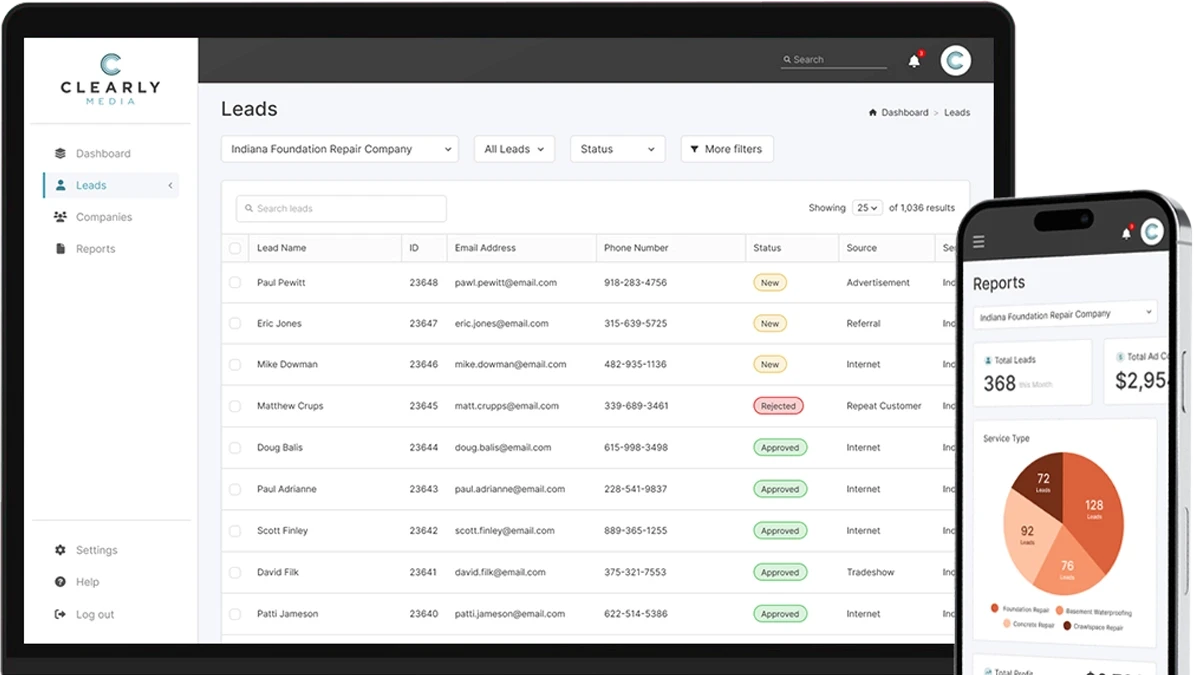
Accessing lead data was a fragmented process. Team members had to log into multiple third-party platforms and manually compile data to evaluate campaign effectiveness.\
This made it difficult to get a real-time, holistic view of lead generation progress and performance metrics.
Core Challenge
How might we create a centralized, at-a-glance dashboard that pulls in lead and expense data from multiple APIs—giving our team the insights they need to make faster, more informed decisions?
Interpreting Data
With multiple clients generating leads through calls, form fills, and paid ads, our team needed a centralized way to track progress and prepare for client meetings.
We mapped out key data needs and defined four core sections for the platform:
Dashboard
A high-level hub showing real-time lead data for a selected company.
Leads
A detailed view of all incoming leads for easy review and tracking.
Companies
Tools for managing clients, setting lead goals, and organizing associated data.
Reports
Customizable exports to support client conversations and performance reviews.
This structure gave us a clear foundation for visualizing and interacting with the most important information.
Design Ideation
Inspired by best-in-class analytics platforms, we translated key data points into modular card components that clearly communicated lead performance at a glance.
Each card was designed to highlight the most relevant metrics—calls, form fills, expenses, and goal progress—allowing team members to quickly assess performance and take action.
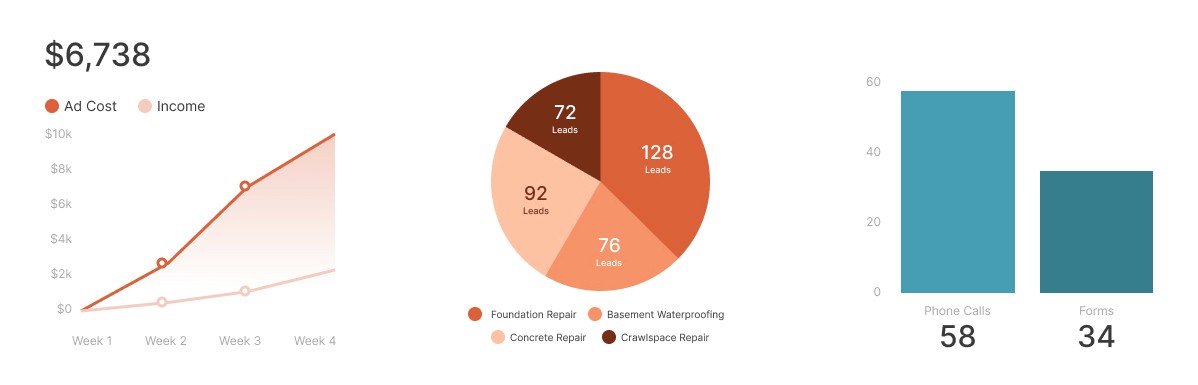
Metric charts created for incoming lead data
Development Handoff
At the end of each design cycle, I presented mockups and interactive prototypes to internal stakeholders and developers. This ensured technical feasibility, alignment on functionality, and smooth implementation across all views of the application.
Key Success & Outcome
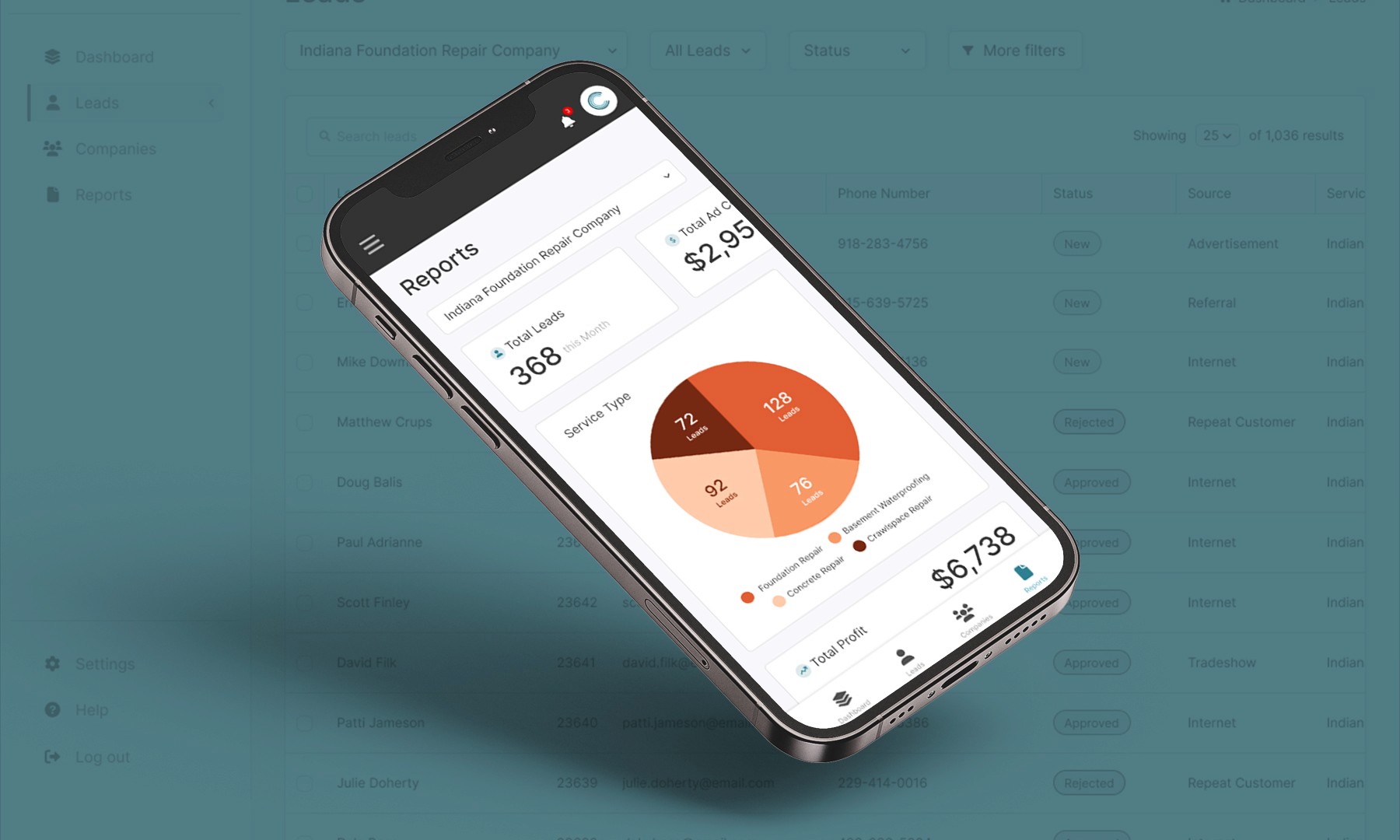
The new lead dashboard streamlined how our team monitors performance across clients—consolidating data, cutting review time in half, and improving decision-making around ad spend. The success of this tool has opened the door for more data-driven design work and greater collaboration between design and engineering.